U.S. Airstrike Hits Isfahan Arsenals as Trump Posts Video Online
According to The Wall Street Journal, the explosions in Isfahan were the result of a U.S. military operation targeting ammunition arsenals. The report noted that the U.S. military utilized "bunker-buster" munitions, including 2,000-pound bombs, to strike the facilities.
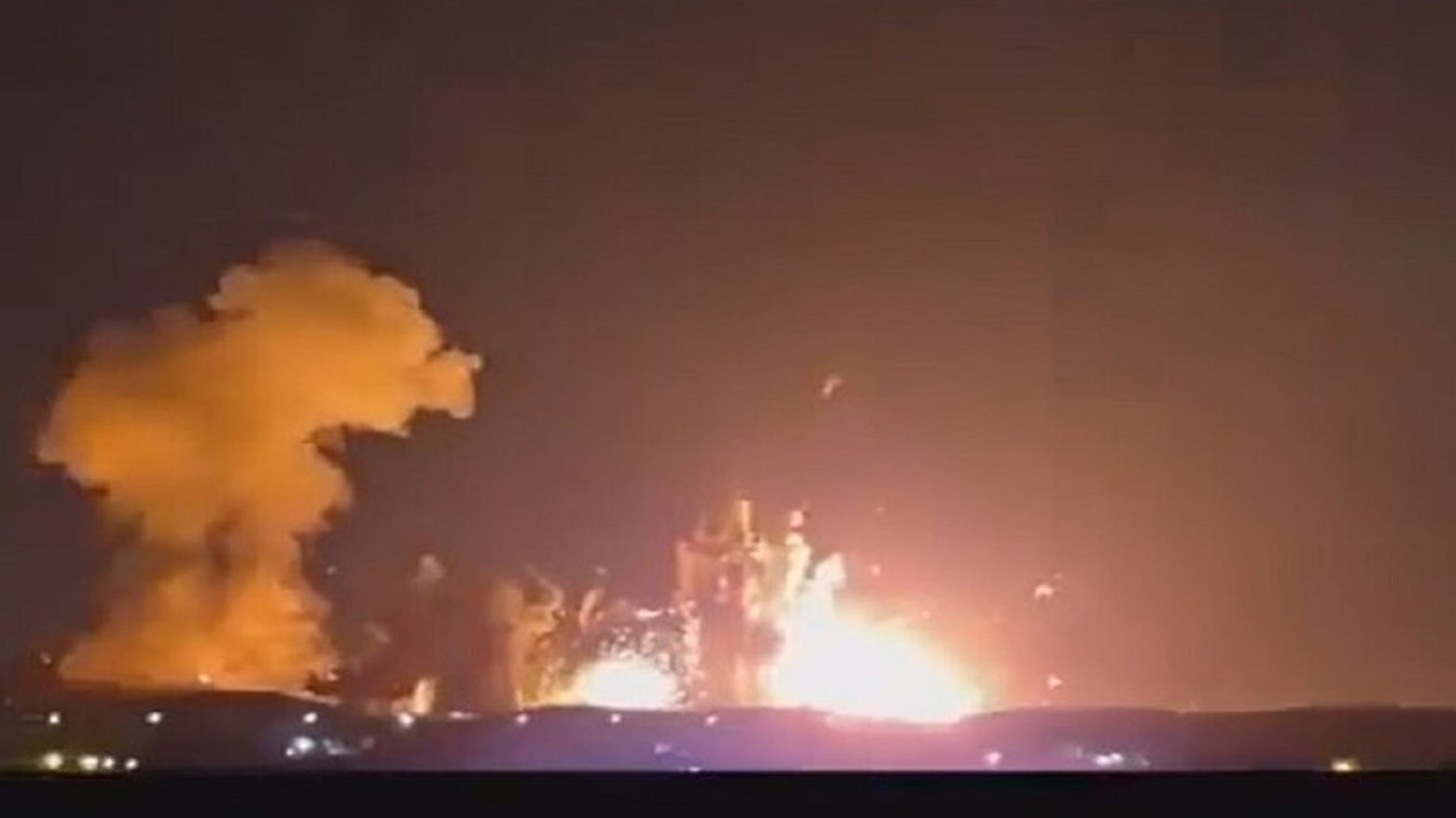
ERBIL (Kurdistan24) - U.S. President Donald Trump shared footage of a recent airstrike on a location in Iran's central city of Isfahan on Tuesday on his Truth Social platform. The president did not include a comment with the video, which was posted minutes after images of massive and secondary explosions in the region began to circulate online.
According to The Wall Street Journal, the explosions in Isfahan were the result of a U.S. military operation targeting ammunition arsenals. The report noted that the U.S. military utilized "bunker-buster" munitions, including 2,000-pound bombs, to strike the facilities.
A report from the BBC further confirmed that the scale of the blasts, which included significant secondary detonations, indicated the successful targeting of weapon depots and arsenals.
This development in central Iran occurred alongside an intensification of military activity across several regional fronts. On Tuesday, the Israeli military confirmed that four of its soldiers were killed in combat in southern Lebanon.
In a series of statements, the military identified three of the deceased as belonging to the same battalion, while a fourth soldier’s identity remained withheld pending notification of kin. The incident also resulted in one soldier being severely wounded and a reservist sustaining moderate injuries.
The United Nations Interim Force in Lebanon (UNIFIL) also reported the deaths of two personnel on Monday following a blast in the south, marking the third peacekeeper killed in 48 hours.
The Israeli military also announced on Tuesday that its air defense systems responded to a barrage of missiles launched from Iran. Sirens were activated across several areas, and at least 10 explosions were heard over Jerusalem, according to reports from an AFP journalist on the ground.
The Israel Defense Forces (IDF) stated on Telegram that they had identified the incoming projectiles as having been launched directly from Iranian territory toward the State of Israel.
Simultaneously, multiple explosions were reported in the Iranian capital. Iranian media outlets, including the Fars and Tasnim news agencies, reported power outages in several sectors of Tehran following the blasts. While power was later reported to have been restored, the Israeli military claimed responsibility for strikes on the Imam Hossein University in Tehran.
The IDF alleged the institution, which is operated by the Islamic Revolutionary Guard Corps (IRGC), was being utilized for the research and development of advanced weaponry.
In Iraq, the Popular Mobilization Forces (PMF) reported on its official website that U.S.-Israeli forces conducted airstrikes on two of its bases. The 45th Brigade in the Jurf al-Nasr sector of Babil Governorate was reportedly hit by three strikes, while a separate strike targeted the 31st Brigade in the Karma sector in eastern Anbar Governorate.
No casualties were immediately reported from these locations. This followed an incident late Monday in Baghdad where a civilian was wounded by shrapnel from an intercepted drone attack targeting the U.S. embassy.
Maritime and energy security remained a focal point of the day’s developments. The Kuwait News Agency (KUNA) reported that an Iranian attack sparked a fire on a Kuwaiti giant crude oil tanker at the anchorage area of Dubai Port in the United Arab Emirates.
While no injuries were reported among the crew, authorities in Dubai noted that falling debris from an air defense interception wounded four people and sparked a separate fire in the city.
The strategic Strait of Hormuz remains a source of tension. Iranian state media reported on Tuesday that a parliamentary commission has approved a plan to impose tolls on vessels transiting the waterway. The proposed legislation includes rial-based toll systems and is described by state television as an implementation of "the sovereign role of Iran" in cooperation with Oman.
In response to the continued volatility in energy corridors, economy and finance ministers from the G7 nations issued a joint pledge to take all necessary measures to maintain the stability of global energy markets.
In the diplomatic sphere, U.S. Secretary of State Marco Rubio expressed hope regarding ongoing private communications with elements within the Iranian government.
Rubio cited internal "fractures" and suggested the United States was receiving positive messages from figures who may have the "power to deliver" a shift in the current conflict.
However, the U.S. President maintained a firm stance on Truth Social, threatening the complete destruction of Iran's oil export infrastructure at Kharg Island, as well as its power plants and desalination facilities, if a deal to end the war is not reached soon.
Regional security coordination was also evidenced on the Turkish border. NATO forces successfully intercepted a missile fired from Iran toward Türkiye on Tuesday. This marked the fourth such interception since the start of the conflict on February 28; Turkish authorities confirmed that none of the four projectiles have successfully impacted Turkish soil.
Within Israel, Prime Minister Benjamin Netanyahu told Newsmax that the military campaign against Iran has achieved more than half of its strategic objectives. He declined to provide a specific timeline for the conclusion of the war.
Domestically, the Israeli parliament passed a $270 billion budget, which includes a 20 percent increase for the Ministry of Defense, totaling $45 billion. The budget passage allows the current government to avoid early elections. Furthermore, the parliament began debating a bill that would establish the death penalty as the default punishment for West Bank Palestinians convicted of murdering Israelis.