Independent MP Says Kurdistan Parliament's Paralysis Threatens Region's Political Future
Hardi Salah says he will participate in efforts to reactivate the legislature, as lawmakers call for an end to the two-year deadlock and urge political factions to resolve their differences inside parliament
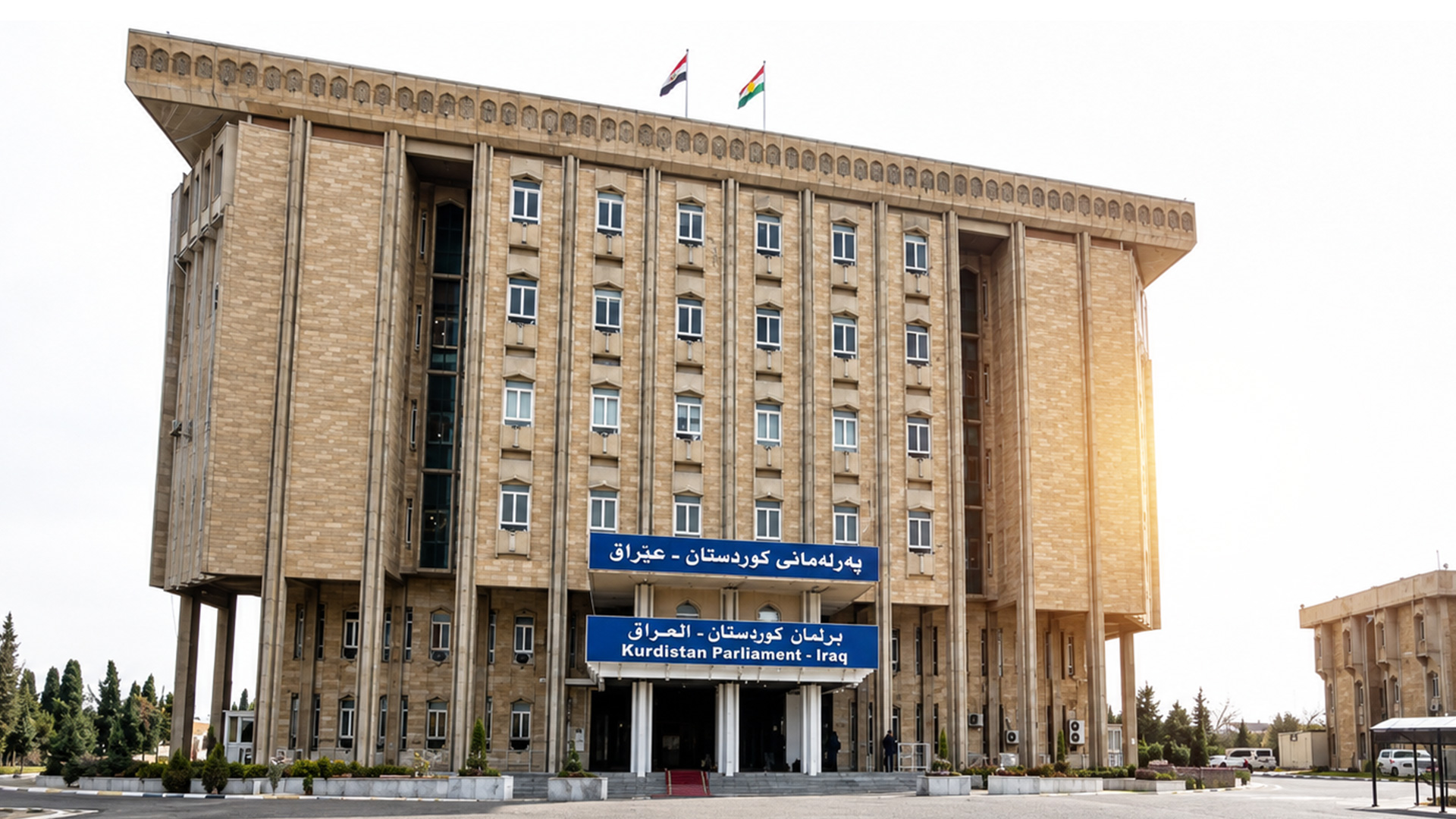
ERBIL (Kurdistan24) — An independent member of the Kurdistan Parliament on Wednesday warned that the legislature's prolonged paralysis poses a serious threat to the Kurdistan Region's political and constitutional institutions, announcing his participation in efforts to reactivate the parliament after more than two years of inactivity.
Speaking at a press conference on Wednesday, MP Hardi Salah said representing the people and protecting the higher interests of the Kurdistan Region must take precedence over political differences.
"According to the statements of all political parties and the people of Kurdistan, the suspension of parliament poses a major threat to the entity of the Kurdistan Region. We came as representatives of the people to resolve their problems. Therefore, today, I am proud to participate in the reactivation of parliament as an independent member of parliament," Salah said.
Salah warned that continued internal political disputes and divisions could create an opportunity for Baghdad to intervene in decisions concerning the Kurdistan Region's future.
He described such a prospect as unacceptable from both national and constitutional perspectives, arguing that the Region's political forces must resolve their differences and determine their own affairs through their elected institutions.
He stressed that parliament remains the legitimate institution for addressing political disagreements, calling on all political parties to bring their positions and disputes into the parliamentary chamber.
"Whatever position any political force holds, let it come and discuss it inside parliament. Political competition, agreements, questioning the government, and amending and passing laws must all take place in this chamber," he said.
Salah added that keeping parliament inactive and holding political meetings outside the institution undermines its legitimacy and disrespects the will of voters.
He also expressed hope that the current parliamentary term would produce a written constitution for the Kurdistan Region, including a specific provision preventing any political party or force from suspending parliament or obstructing its work in the future.
Lawmakers urge factions to attend parliamentary session
The renewed push to reactivate parliament comes as the Kurdistan Democratic Party (KDP) parliamentary bloc has called on all political factions to attend Wednesday's session and complete the outstanding procedures of the sixth parliamentary term.
MP Nesrat Sufi, speaking to Kurdistan24, said the KDP bloc had invited all parliamentary factions to attend the session to complete the inaugural sitting of the 2024 parliamentary term and elect the legislature's presidency.
Sufi said the bloc had specifically called on the Patriotic Union of Kurdistan (PUK) and other political forces to participate, expressing concern that the PUK appeared to favor postponing parliamentary proceedings until a political agreement was reached.
He argued that waiting for another political agreement was not a reasonable solution after more than two years of delay, emphasizing that parliament does not belong to any particular political party but is a national institution representing the entire Kurdistan Region.
He said the legislature must resume its work to serve citizens, exercise its legislative responsibilities, and hold the government accountable.
MP Bakhtiar Besari, from the KDP parliamentary bloc, also called on all factions to attend the session, saying political groups share concerns about the current institutional deadlock.
"All the other factions are also concerned about the Kurdistan Region and worried about the current paralysis. They will come to the parliamentary chamber and complete the legal quorum so that we can elect the presidency," Besari told Kurdistan24.
Regarding the KDP's candidate for the parliamentary leadership, Besari said the nomination would be settled during the parliamentary proceedings.
He described fellow lawmakers from other political factions as partners within the same legislature and said he expected them to cooperate in restoring parliament's work.
MP Muna Qahwachi also confirmed on Wednesday that she would attend the parliamentary session, adding to calls from different political representatives for the legislature to resume its activities.
MP Kazhan Karim said the KDP had exhausted peaceful efforts to resolve the political differences and had spent two years waiting for reconciliation and an agreement. She stressed that the door remained open for PUK lawmakers to participate in the parliamentary proceedings.
"The door is now open for our brothers and sisters in the PUK to come and participate, because Kurdistan can no longer remain under this burden," Karim said.
Regarding preparations for the session and the parliamentary leadership, Karim said Vala Farid remained the KDP's candidate for the speakership. She added that invitations had been extended to all lawmakers the previous day, saying individual approaches to each member were not practical.
Karim said all preparations had been completed and expressed hope that the initiative would bring relief to the people of the Kurdistan Region. She emphasized that parliament was the appropriate place for dialogue and political debate, arguing that the legislature must first be reactivated before political parties can pursue their respective agendas and programs.
She added that the KDP had consistently placed national interests above party interests and would continue its visits and fraternal contacts with other political forces to encourage their participation in what she described as a national responsibility requiring collective cooperation.
Election results and the parliamentary deadlock
The Kurdistan Region held its sixth parliamentary elections on Oct. 20, 2024, following repeated delays. The Iraqi Independent High Electoral Commission announced the final results on Oct. 30, allocating the 100 seats in the legislature among political parties and minority components.
The Kurdistan Democratic Party emerged as the largest political force, followed by the Patriotic Union of Kurdistan and the opposition New Generation Movement.
The distribution of the 95 general seats was as follows:
Kurdistan Democratic Party (KDP): 39 seats
Patriotic Union of Kurdistan (PUK): 23 seats
New Generation Movement: 15 seats
Kurdistan Islamic Union (KIU): 7 seats
Halwest Movement: 4 seats
Kurdistan Justice Group (Komal): 3 seats
People's Front: 2 seats
Change Movement (Gorran): 1 seat
Kurdistan Region Alliance: 1 seat
The remaining five seats were allocated to minority components, bringing the parliament's total membership to 100.
Despite the election, political disagreements over parliamentary leadership and the formation of the Kurdistan Regional Government's (KRG) tenth cabinet prevented the legislature from beginning its regular work.
The first session of the sixth parliamentary term was held on Dec. 2, 2024, when elected lawmakers took their constitutional oaths and officially assumed their parliamentary responsibilities.
However, the session was adjourned after lawmakers failed to secure the required legal quorum to elect the speaker, deputy speaker, and parliament secretary. Subsequent efforts to reconvene the legislature also failed, leaving the parliament unable to exercise its legislative and oversight functions.
Several attempts have since been made to break the deadlock. In January 2025, an attempt to convene lawmakers to elect the parliamentary leadership failed because of insufficient attendance. Mohammed Sulaiman, the interim parliament speaker and a New Generation Movement lawmaker, subsequently announced his resignation after failing to secure the required quorum.
In August 2025, the KDP and PUK announced an agreement to make intensive efforts to reactivate parliament in September and advance the formation of the new regional government. However, disagreements between the two main parties over power-sharing arrangements and key government positions prevented the agreement from being implemented.
The KDP renewed its appeal in June 2026, calling on all parliamentary factions, regardless of their seat numbers, to return to the legislature and resolve outstanding political issues through parliamentary dialogue.
The party said previous bilateral and multilateral meetings, initiatives, delegations, and communications had failed to produce the necessary breakthrough.
In September 2026, reports indicated that the KDP and PUK had again reached an understanding to reactivate parliament in October, with the aim of electing its leadership and moving forward with the formation of the tenth KRG cabinet. However, the political deadlock persisted.
Wednesday's session seen as test of political cooperation
The latest initiative seeks to complete the unfinished inaugural session rather than immediately begin ordinary legislative business. Lawmakers are expected to address the outstanding constitutional procedures, including the election of the parliament's presidency, which would allow the legislature to move toward regular operations.
The session requires the attendance of at least 51 members to meet the legal quorum, making participation by the PUK and other parliamentary factions particularly important.
The prolonged paralysis has also delayed the formation of the tenth KRG cabinet, leaving the existing government unable to move forward with the normal political transition following the 2024 elections.
The latest calls from independent lawmakers, the KDP bloc, and representatives of other political groups reflect growing pressure to restore the parliament as the central institution for political negotiations, legislation, and government oversight.
Whether Wednesday's initiative will secure sufficient cross-party participation and finally break the deadlock remains a key test for the Kurdistan Region's political leadership.