Zelensky Welcomes Shift in US Approach as Ukraine-Russia Talks Resume in Abu Dhabi
Kyiv Seeks Security Guarantees and Prisoner Exchange as Washington Pushes for New European Security Framework
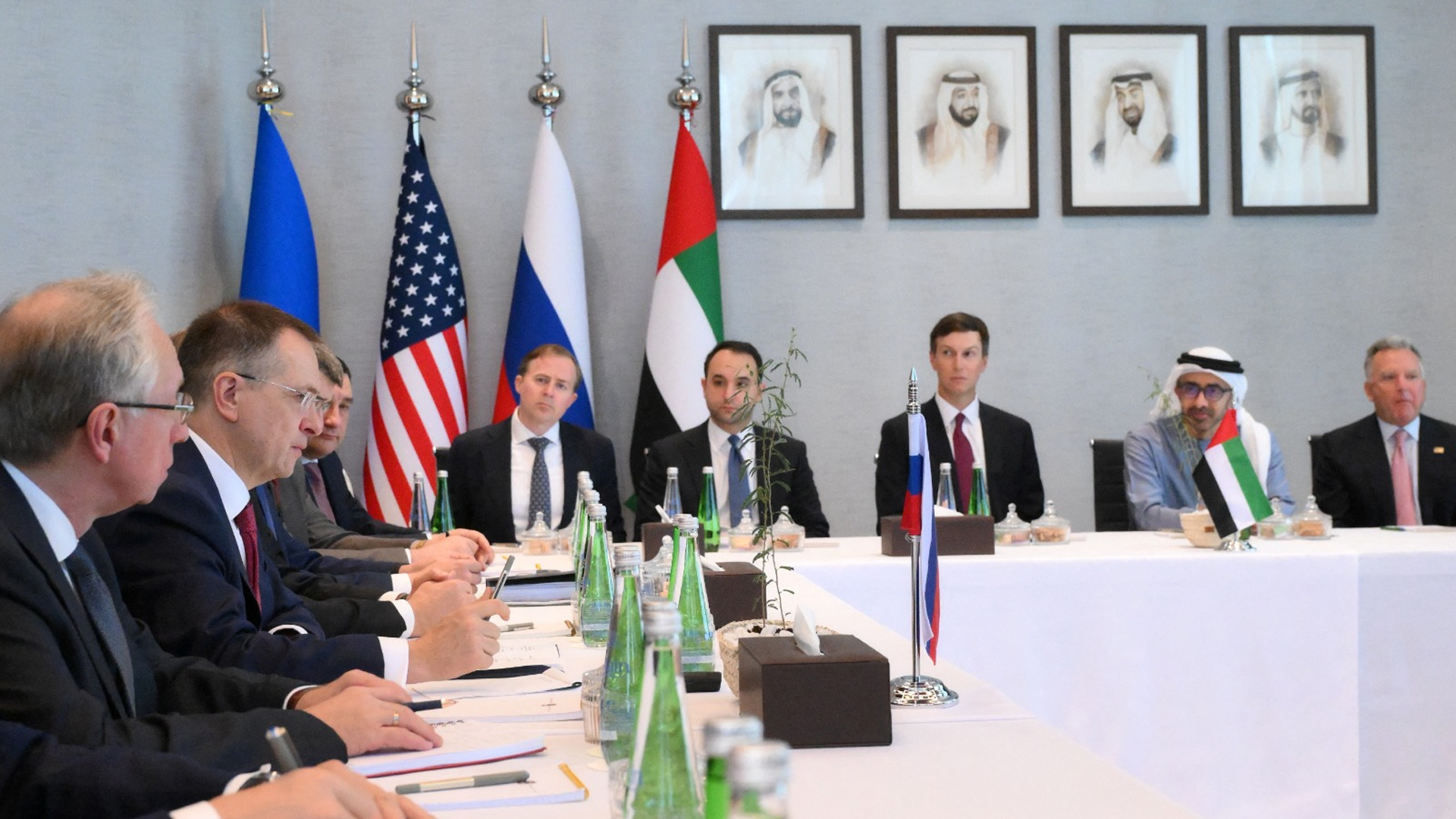
ERBIL (Kurdistan24) — Ukrainian President Volodymyr Zelensky has welcomed what he described as a change in Washington's approach to negotiations with Russia, expressing optimism over the latest diplomatic efforts in Abu Dhabi while stressing that any settlement must include firm security guarantees for Ukraine.
Speaking in Copenhagen on Tuesday, Zelensky described the discussions between Ukrainian and Russian representatives as “constructive and quite substantive,” saying his negotiating team had reported progress on humanitarian issues and security guarantees.
“I see changes. I'm very happy with what I hear,” Zelensky said when asked about the evolving approach of US mediators, including President Donald Trump's special envoy Steve Witkoff and son-in-law Jared Kushner.
The negotiations, which began in the Emirati capital on Tuesday, are the first direct trilateral discussions involving Ukraine, Russia, and the United States since February, when previous diplomatic efforts stalled as Washington's attention shifted toward the war involving Iran.
The initial meeting lasted several hours, with discussions expected to continue into a second day on Wednesday. A source from the Russian delegation said the next round was scheduled to begin at noon local time.
Kushner told participants that Washington had “narrowed the gaps” between the two sides, although he provided no details, expressing hope that the discussions could move toward a settlement of Europe's deadliest conflict since World War II.
Zelensky also said negotiators were working on a large-scale prisoner exchange, adding that US officials were expected to travel to Russia for further discussions on the issue.
New European Security Framework
A central issue in the negotiations is Washington's proposal to develop a new security framework involving Ukraine, Russia, and European countries.
US Secretary of State Marco Rubio described the latest discussions as “very productive” and said European countries should eventually be included in the negotiations because they were part of resolving the conflict.
Kushner said Washington hoped to establish a framework capable of securing “decades, if not centuries, of peace” across Europe.
The proposal comes amid European concerns over US President Donald Trump's willingness to negotiate a broader security arrangement with Moscow, particularly amid fears that Ukraine could face pressure to accept territorial concessions in exchange for an agreement.
Kyiv has repeatedly warned against any arrangement that would determine Europe's security future without the participation of the countries concerned, drawing comparisons with the 1945 Yalta Conference, when the post-war division of Europe was negotiated by the Allied powers.
“Putin wants the USSR back,” Zelensky told Danish media, referring to Russian President Vladimir Putin's broader ambitions in the region.
Moscow has made a review of Europe's existing security arrangements a central demand, reflecting its longstanding opposition to NATO's eastward expansion.
Russia included diplomat Sergei Ryabkov in its negotiating delegation. Ryabkov was among the Russian officials who presented Moscow's demands before the February 2022 military operations, including calls for NATO to withdraw its military presence from Eastern Europe.
A source within the Russian delegation said ending the war was only one item on the agenda, adding that Moscow wanted to address security arrangements across the entire European continent.
Kyiv Seeks Ceasefire and Long-Term Guarantees
Ukraine's chief negotiator, Rustem Umerov, said Kyiv's immediate priorities remained achieving a ceasefire and obtaining credible security guarantees to prevent another Russian attack.
“Our people are waiting to end this war,” Umerov said.
Before the negotiations, Umerov held discussions with US representatives and European, EU, and NATO officials. NATO's top military commander in Europe, General Alexus Grynkewich, also participated in the broader discussions.
In a joint statement, European representatives, Ukraine, the United States, and NATO reaffirmed their “shared commitment to a strong post-war European security architecture.”
Ukraine is also seeking long-term military and financial assistance to maintain its defensive capabilities after the war. A senior Ukrainian source told AFP that Kyiv wants at least 10 years of financial support to sustain an army of 800,000 personnel capable of deterring future Russian aggression.
Ukrainian and French foreign ministers, meanwhile, welcomed US efforts to negotiate partial truces, describing them as a possible first step toward a complete and unconditional ceasefire.
Last month, a localized truce in Ukraine's Kherson region, brokered by US First Lady Melania Trump, became the longest pause in fighting during the war.
Fighting Continues Despite Diplomatic Efforts
Despite the renewed diplomatic activity, hostilities continued overnight, underscoring the challenges facing negotiators.
Aleksandr Drozdenko, governor of Russia's Leningrad region, said a Ukrainian drone barrage triggered a fire at Ust-Luga, a strategically important Baltic port used for Russian oil exports.
In a subsequent statement on Wednesday, Drozdenko said three workers had been injured and that Russian air defenses had intercepted 150 drones in the region during the night.
Meanwhile, Russian forces continue their offensive in eastern Ukraine, although they have not captured the entire Donetsk region, which Moscow considers a key territorial objective.
Russia is demanding that Kyiv surrender the remaining parts of the region under Ukrainian control, while President Trump has suggested that Ukraine could eventually have to accept territorial changes as part of a settlement.
“It's going to end up with a little bit different shape,” Trump said before the latest negotiations.
Russia has also continued strikes against Ukraine's energy infrastructure, raising concerns about the availability of heating, electricity, and running water for millions of Ukrainians as winter approaches.
The Abu Dhabi negotiations therefore face several major obstacles, including territorial disputes, the future of Ukraine's military, NATO's role, and the security architecture of Europe.
Whether Washington can bridge the differences between Kyiv and Moscow remains uncertain, particularly as fighting continues on the ground and both sides maintain competing demands for a post-war settlement.