Al-Zaidi Discusses Security Coordination with Badr, PMF Leaders
Iraqi PM Ali al-Zaidi discussed security coordination with Badr’s Hadi al-Amiri and PMF chief Falih al-Fayyadh, while the commander of Iraq’s Air Defense said the first shipment of air defense systems will arrive soon.
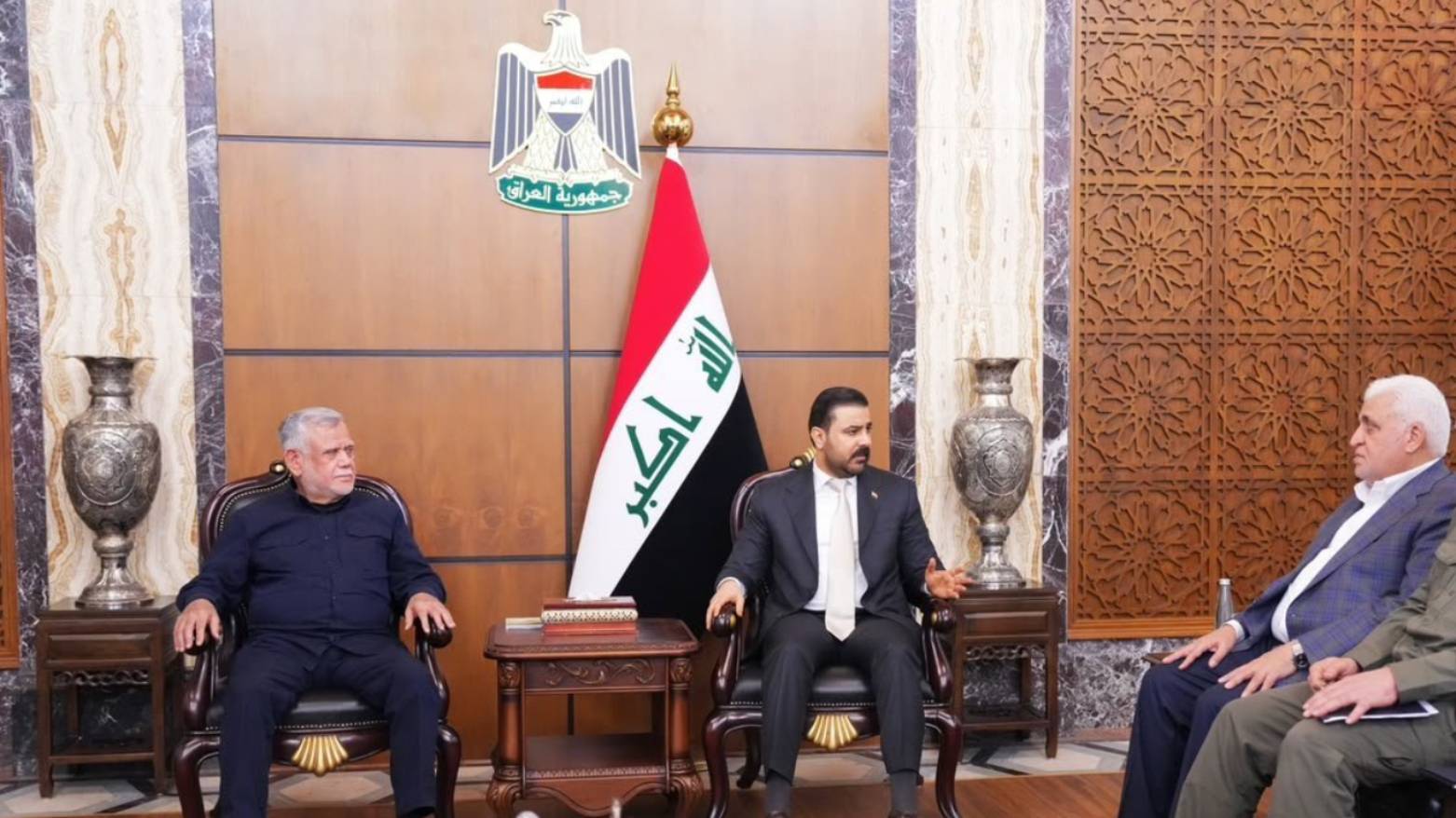
ERBIL (Kurdistan24) - Iraqi Prime Minister Ali Falih al-Zaidi discussed the latest security and political developments in Iraq and the region with two senior figures on Thursday, stressing closer coordination among security institutions. The same day, the commander of Iraq’s Air Defense Command announced that contracts for advanced air defense systems have been signed and that the first shipment will arrive soon.
Zaidi received Hadi al-Amiri, secretary general of the Badr Organization, and Falih al-Fayyad, Chairman of the Popular Mobilization Body (PMF), the Iraqi prime minister’s media office said.
According to the office, the meeting covered a number of important files related to the security and political situation, along with the latest developments in Iraq and the region.
Participants stressed the importance of strengthening joint coordination and cooperation among all security institutions and agencies.
This, the office said, falls within the directives and orders of the commander in chief of the armed forces and serves to consolidate stability, protect the country’s security and uphold the sovereignty of Iraq’s territory.
Zaidi reaffirmed that the government is continuing to implement the provisions and content of its program across different fields.
He said this would reinforce the pillars of state sovereignty and the rule of law and support comprehensive development nationwide.
The meeting also highlighted the importance of uniting national efforts and strengthening dialogue and mutual understanding among all political forces and parties.
The aim, the office said, is to support the national path, raise the state’s capacity to face challenges, and work toward fulfilling the aspirations and expectations of citizens.
Air defense contracts signed
Separately, Lt. Gen. Pilot Staff Mohanad Ghalib Al-Asadi, commander of Iraq’s Air Defense Command, said contracts have been signed to purchase a number of advanced air defense systems and that the first shipment will arrive soon.
He spoke in an interview with the Defense Ministry’s media office, which the Iraqi News Agency published.
Al-Asadi said the command presented details of its current capabilities and its vision for developing Iraq’s air management during a visit by the prime minister and commander in chief of the armed forces to its headquarters in the past two or three months.
The command also outlined air targets and plans to develop human resources and infrastructure, he said, adding that the prime minister has given great importance to accelerating the build-up of the command’s capabilities.
The command has set a strategic plan to develop its capabilities in three timed phases, according to Al-Asadi. He said technical teams examined and tested several advanced air defense systems and weapons, and their success led to the decision to contract them.
Several contracts have been funded, and the first batch of systems is expected soon.
Al-Asadi said the contracted systems are highly effective and that some have shown major impact in regional conflicts.
The command has begun sending trainers to the countries that produce the systems and weapons, in preparation for using them.
Al-Asadi stressed that the Iraqi government, with all its ministries, is supporting the build-up of air defense capabilities in infrastructure, training, equipment and weapons.
He said the finance minister has expressed readiness to provide the funds needed to buy the systems, in line with the prime minister’s directives.
On timing, he said building military capabilities takes time and that weapons cannot be acquired and put into service immediately after funds are allocated. Work is moving faster than expected, he said, despite the obstacles facing the command.
Al-Asadi also announced that the command has obtained the necessary approval from the army chief of staff to hold a live-fire military drill next week.
The exercise will involve engaging aircraft that violate Iraqi airspace, up to dealing with kamikaze drones, using the weapons currently available.
Al-Asadi said drone manufacturers are working to reduce the radar cross-section of their aircraft in order to delay detection.
He said several countries have spent billions of dollars on air defense systems yet still suffered airspace violations because of low-cost drones.
He added that no air defense in the world can protect the sky 100%. Advances in ballistic missiles and drones, he said, have shown that even the most advanced systems can be defeated.
Air defense operations also cost more and take more time than attacks, he said.
On sovereignty, Al-Asadi said flying in national airspace without prior approval is a violation, except in cases regulated by agreements and permitted drills. Flight in outer space is treated differently from national airspace, he said.
He reassured citizens that the command is working with the capabilities at its disposal to protect Iraqi airspace. Specialized cadres are working away from the eyes of the media, he said, and are capable of carrying out their duties to defend the Iraqi people and the country’s aerial sovereignty in line with state decisions and military commands.