Five Centuries of Tradition: Amedi's Historic Tahini Mill Attracts European Buyers
Amedi's 500-year-old tahini mill preserves a century of family craftsmanship as traditional Kurdish sesame paste attracts growing demand from European customers.
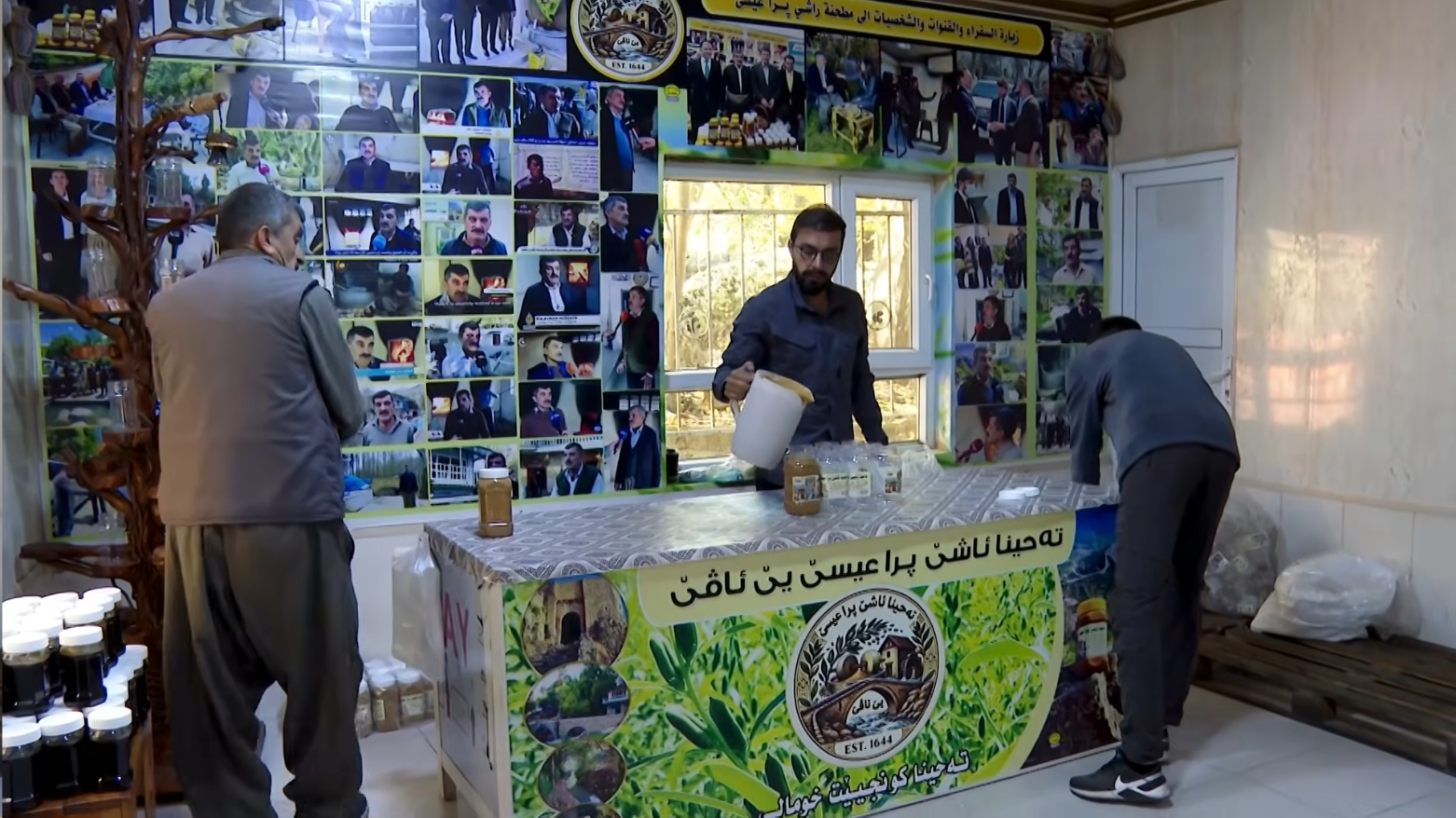
ERBIL (Kurdistan24) - At an old mill in Amedi, turning sesame into tahini remains a careful process of soaking, washing, pounding and roasting before the seeds are finally ground into a thick paste. For mill owner Suleiman Deshtani, the work is also a connection to his family's history and a craft he says has survived in the district for five centuries.
The mill stands near a bridge associated with Pira Isa, whom Deshtani described as a wise man who served the Amedi emir and his government. Both the bridge and the mill date back about 500 years, according to the owner's account.
"This is the oldest mill in the Amedi district," Deshtani told Kurdistan24, speaking proudly of a place that has become known for its traditional tahini.
His family, he said, has practiced the craft for more than 100 years. Although the mill has undergone extensive renovation, its purpose remains unchanged: producing sesame paste using the methods handed down through generations.
A Family Craft, One Stage at a Time
Inside the mill, workers move the sesame through a series of stages that require attention long before grinding begins.
First, the seeds are placed in water to soften. Workers then remove and wash them before transferring them to a pounder. After crushing, the sesame is placed in brine to separate the seed from its husk.
A mill worker explained that the process allows the sesame to float while the husks settle, making it possible to separate the two.
The cleaned seeds then go into an oven to roast. Deshtani said they remain exposed to the heat for around one hour and 50 minutes. Once roasted, they are left to cool and passed through a sifter to remove remaining impurities.
Only then does the sesame reach the mill, where it is ground into tahini ready for customers.
"We put it in the oven; in the oven, it roasts for about 1 hour and 50 minutes," Deshtani said. He described the subsequent cooling, sifting and grinding as essential steps before the product can be sent to market.
While the resulting paste may look simple when it is poured into a container, its preparation involves repeated washing, sorting and handling by the people working at the mill.
Orders From Germany, France and Sweden
Deshtani's immediate challenge is no longer persuading customers to try the tahini. It is producing enough to satisfy them.
He said requests now arrive from people living abroad, including in Germany, France and Sweden. Orders also pass through Duhok, where customers arrange to send the product onward to relatives or buyers overseas.
One order being prepared during the visit was destined for Duhok and then Germany, he explained.
"Many people abroad request this tahini now, but we don't have enough," Deshtani said.
Demand has become so strong that he has little or no stock available for casual customers, even at the mill itself. Visitors continue to arrive, and he believes the reputation of the product has made it a point of comparison for tahini sold elsewhere in the district.
The shortage is a consequence of limited production rather than a lack of interest. Deshtani said the mill's current output is low compared with the volume of requests, leaving him under pressure to produce more while maintaining the standard he associates with its name.
Amedi's Wider Tahini Tradition
Amedi, in Duhok province, has long been associated with water-powered mills and the production of tahini, known locally as rashi. Earlier Kurdistan24 reporting described how producers have continued using traditional milling techniques even as electrically powered methods became more common.
In a December 2025 report, another local mill owner, Rahand, attributed the distinctive taste and texture of Amedi tahini to its sesame and traditional processing. He said the water mills could operate throughout the year, helping sustain the craft across seasons.
The local industry is also closely tied to agriculture. In October 2024, Amedi agriculture director Hakar Hamid Rashid reported that the district had 31 sesame mills and produced 240 tons of sesame seeds that season. Those figures describe that earlier agricultural season and do not establish the current output of Deshtani's mill.
For Deshtani, the industry's broader reputation is visible in the orders that keep arriving. His concern is how to meet demand without losing the character of a family operation rebuilt and maintained over decades.
As workers pour another batch of tahini for delivery, he speaks with gratitude about the customers who continue to seek it out. The mill's future, he hopes, will be as enduring as the tradition he inherited.